


Recent Projects
Laser Machinery Manufacturing -Modular Cleanroom
2026-06-04


General Surgery Operating Theatre - FastIns Modular Cleanroom
This case study presents a general surgery operating theatre completed for a hospital in Cambodia. The entire project—from construction to handover—was finished in just three weeks, demonstrating an efficient, replicable model for overseas medical facility delivery.
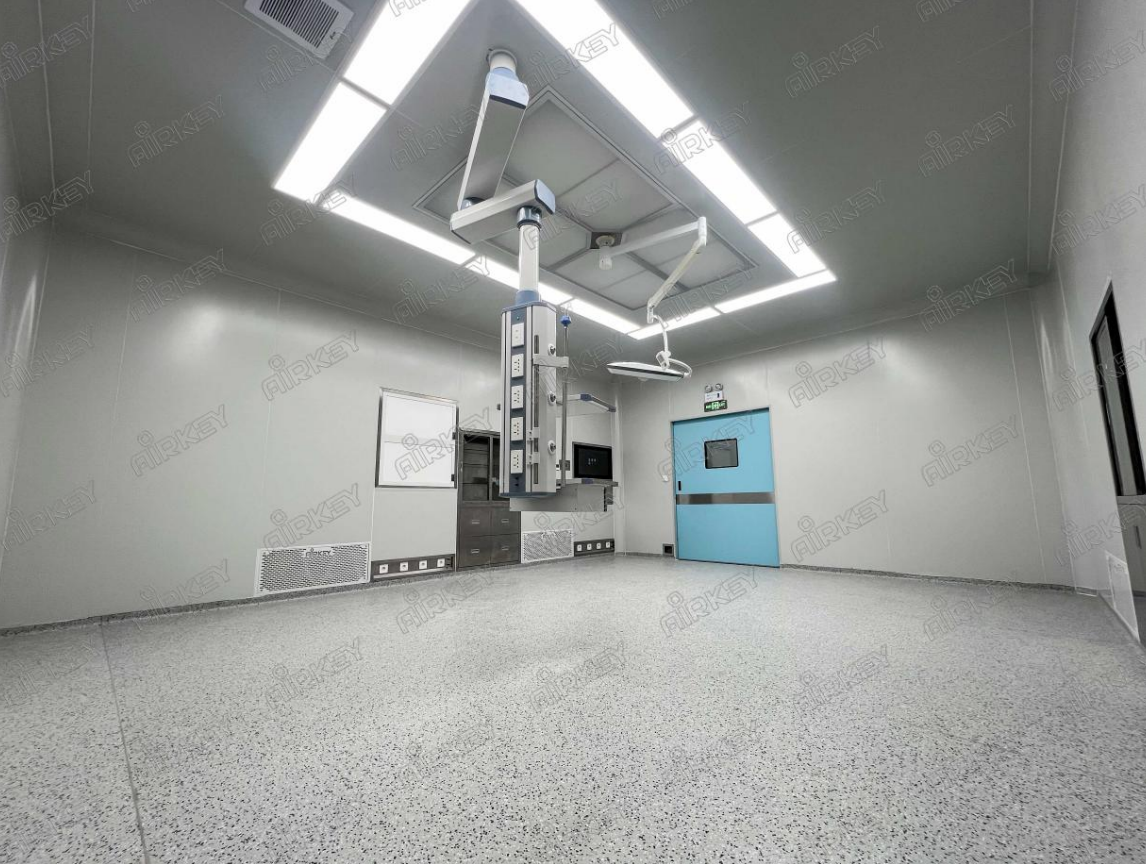
Rapid Construction Model
The project adopted a “one Chinese engineer on-site guidance plus five to ten local workers” approach. This close collaboration allowed professional expertise to merge with local labour, significantly shortening the construction cycle while maintaining high quality. The three‑week timeline validates this hybrid model as both practical and scalable for similar international projects.
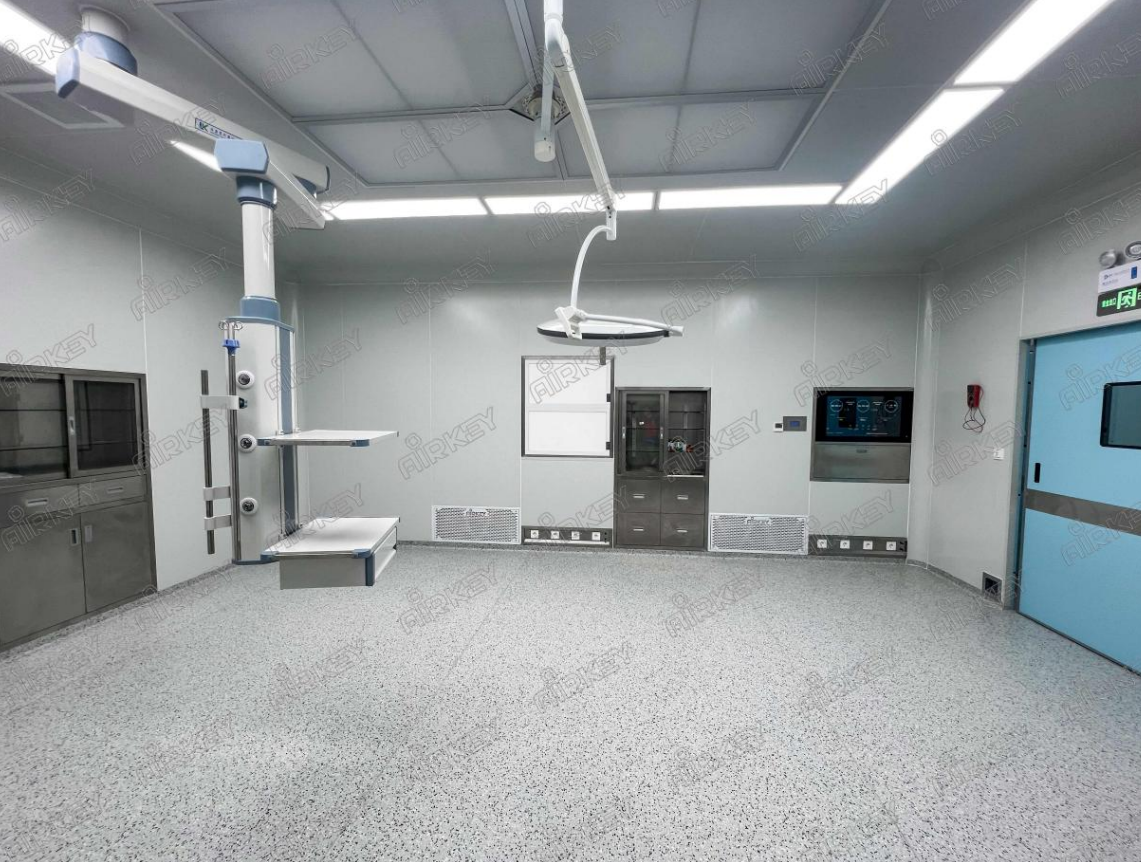
Precision HVAC Environmental Control
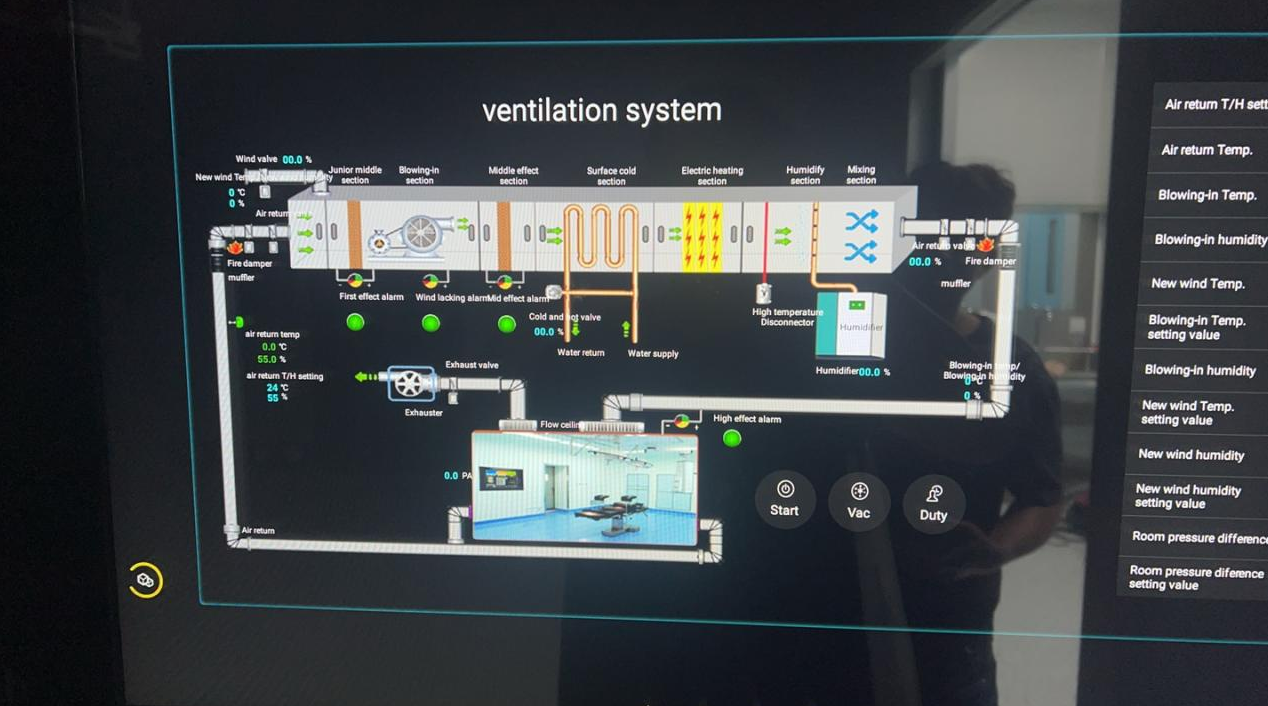
A dedicated HVAC system maintains the operating theatre at a constant temperature of 21–25°C and relative humidity between 30% and 60%. These stable conditions reduce the risk of intraoperative hypothermia for patients and ensure stable physiological functions. Constant humidity also inhibits bacterial growth, prevents static electricity buildup, and guarantees reliable performance of sensitive instruments. At the same time, the comfortable environment supports surgical staff, indirectly improving both efficiency and safety.
Intelligent Centralised Control Panel
The theatre is equipped with a multifunctional intelligent control panel that integrates anaesthesia and surgery timers, real‑time monitoring of temperature, humidity and pressure differentials, gas alarms, ventilation control, and internal telephone communication. This centralised interface enables quick oversight of all environmental parameters and equipment, greatly enhancing management responsiveness and daily operational efficiency.
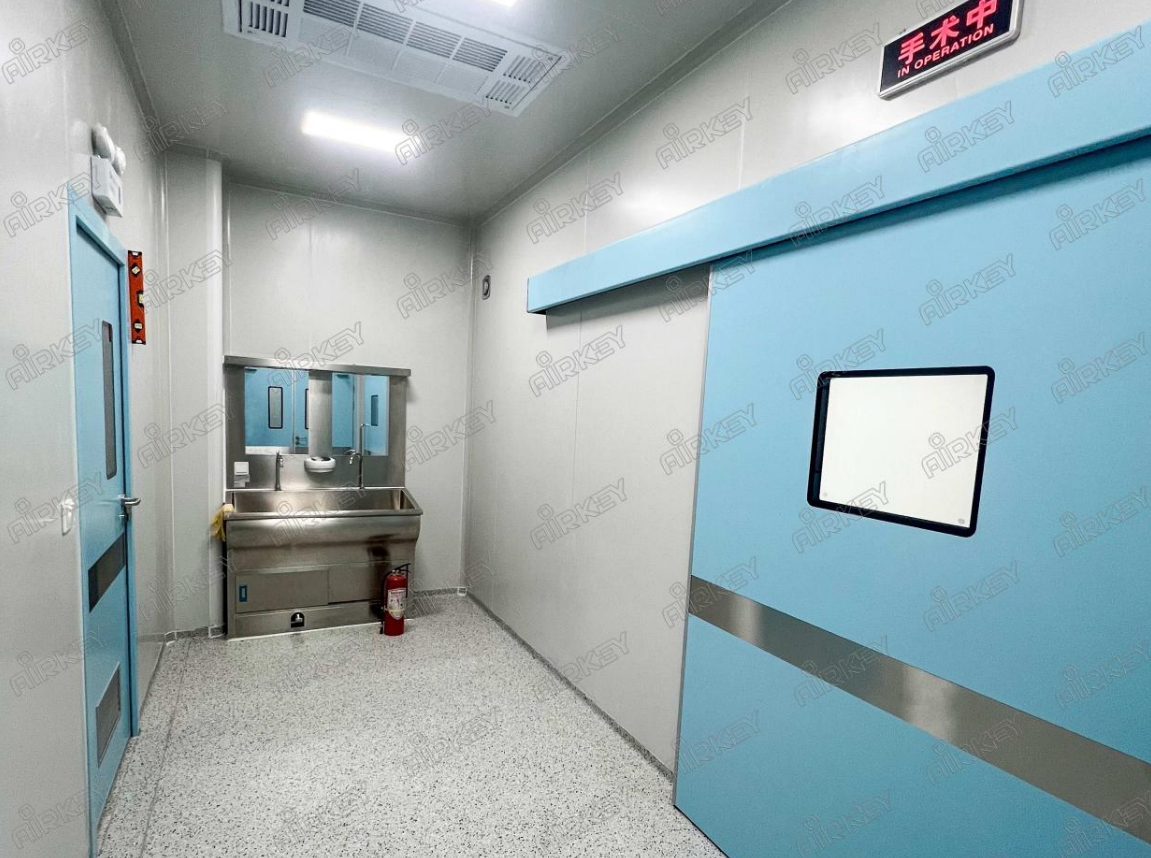
Laminar Flow Ceiling and Clean Air Supply
A high‑efficiency laminar flow ceiling is installed directly above the operating area, delivering unidirectional, uniform clean airflow. This ensures that the core surgical zone meets ISO Class 7 (Class III) cleanliness standards, providing the fundamental air‑quality guarantee for a safe surgical environment.
Functional Zoning and Clean‑Dirty Separation
The design clearly separates the ISO Class 7 operating core, the ISO Class 8 (Class IV) patient passage (pre‑operative preparation area), the clean corridor, and the doctors‘ rooms. This rational division effectively separates clean and contaminated routes for both personnel and materials, optimising workflow and reinforcing infection control.
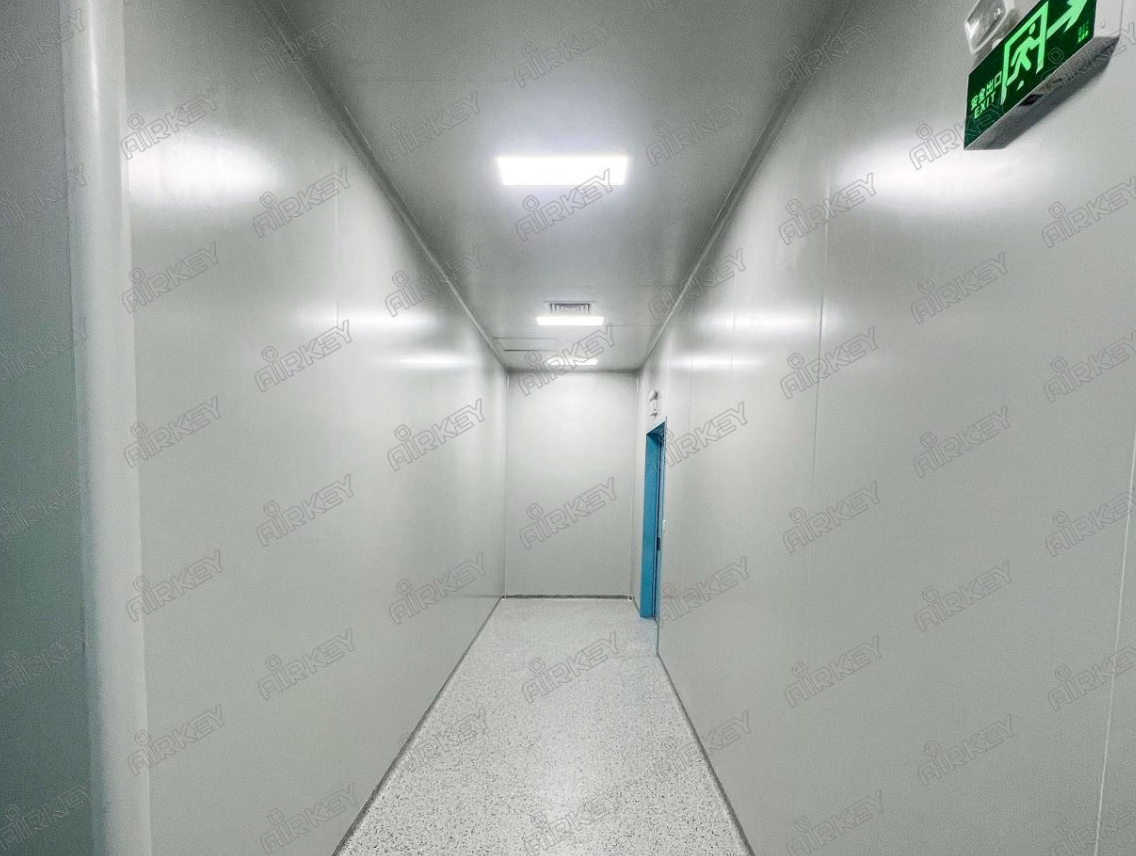
Interior Finishes: Walls, Ceilings and Flooring
Smooth, purified cleanroom panels are used for both walls and ceilings, with all internal and external corners finished in rounded curves—eliminating dead spots and making cleaning easy. The anti‑static PVC sheet flooring is seamlessly welded and integrated with wall skirting using round‑corner transitions, further preventing dust accumulation and static risks.
Integrated Storage and Medical Gas Terminals
Built‑in stainless steel cabinets for instruments, medicines, and anaesthesia supplies are laid out in a modular, pre‑drilled design that ensures precise installation and neat alignment. On the walls, modular gas terminal units combine outlets for oxygen, compressed air, vacuum, and nitrous oxide, enabling centralised, safe gas supply that enhances surgical efficiency.
Additional Equipment and Utility Features
A medical hermetic electric sliding door with foot‑sensor activation allows hands‑free entry and exit, significantly reducing cross‑contamination risks. In addition, four built‑in multifunctional socket boxes are prefabricated and flush‑mounted at strategic positions according to client requirements, providing convenient power access for various equipment.
Conclusion
Through precise environmental control, intelligent management, modular equipment, and strict clean‑dirty zoning, this Cambodian general surgery operating theatre achieves a safe, comfortable, and easy‑to‑maintain modern surgical space. The three‑week delivery further confirms that the “Chinese guidance + local construction” model is an effective strategy for fast‑tracking quality healthcare infrastructure abroad.


